Why You Should Jump on Event Tourism
- RV Destinations
- Road Trip

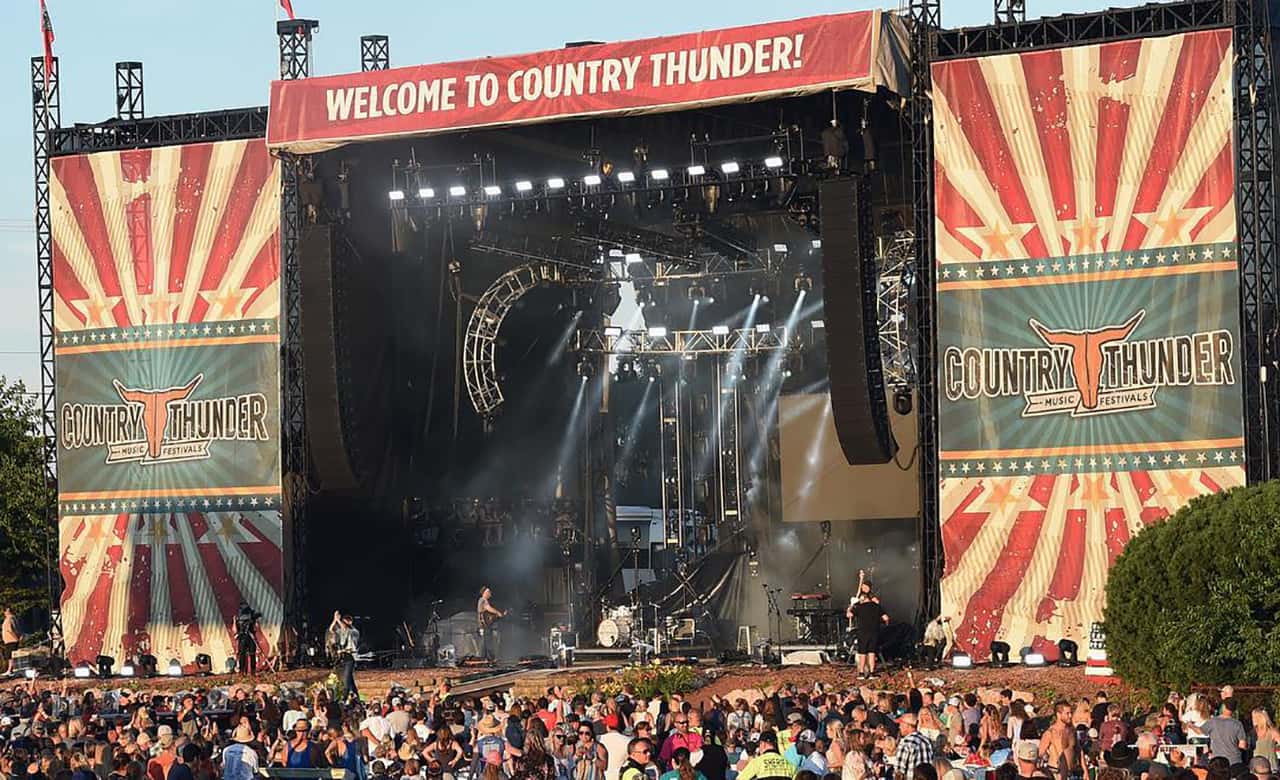
More travelers are flipping the script on how they plan a getaway. Instead of picking a destination and hoping something fun happens while they're there, they're picking the event first, whether that's a concert tour stop, a championship game, or a festival weekend, and building the whole trip around it. This shift, often called event tourism, has become one of the fastest-growing corners of the travel industry, driven by everything from must-see artists to bucket-list sporting events.
The catch is that planning a trip around a single date on the calendar comes with its own headaches:
-
Hotels near the venue sell out fast, sometimes months in advance
-
Prices spike the closer you get to the event date
-
Check-in and check-out windows rarely line up with when you actually need to arrive or leave
-
Nearby lodging options can be miles from the venue, adding time and cost
For travelers chasing a specific experience rather than a general vacation, these logistics can turn an exciting trip into a stressful one.
That's where RV travel changes the equation. When your lodging, parking, and schedule travel with you, the biggest pain points of event-based trips disappear. In this post, we'll break down what event tourism looks like today, the types of events worth planning a trip around, and why an RV might be the smartest way to attend the next big thing on your list.
What Is Event Tourism, Really?
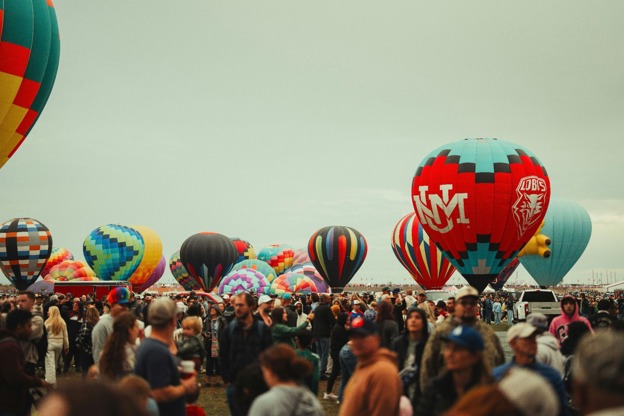
At its core, event tourism means traveling because of a specific happening rather than a specific place. The destination is secondary. The event, whether it's a headlining tour, a rivalry game, or a weekend festival, is the whole reason for the trip.
This is different from traditional travel planning. A destination-first traveler picks a city or region and figures out what to do once they arrive. An event-first traveler works backward from a date on the calendar: they find out where their favorite artist, team, or festival is showing up, then plan everything else around that single point in time.
A few things are fueling the growth of this approach:
-
Social media and fandom culture: Seeing friends or influencers attend a concert or game creates a pull to be there in person, not just watch from home.
-
Bucket list mentality: Many travelers now treat major events, like a Super Bowl or a once-in-a-lifetime tour stop, as must-attend experiences worth building a whole trip around.
-
More accessible information: Tour dates, ticket drops, and festival lineups are easier to track than ever, making it simple to plan a trip the moment tickets go on sale.
The result is a travel style where flexibility matters just as much as the event itself. Once someone commits to attending something specific, they need transportation and lodging that can adapt to a schedule they don't control, not the other way around.
The Rise of Planned Events as a Travel Motivator
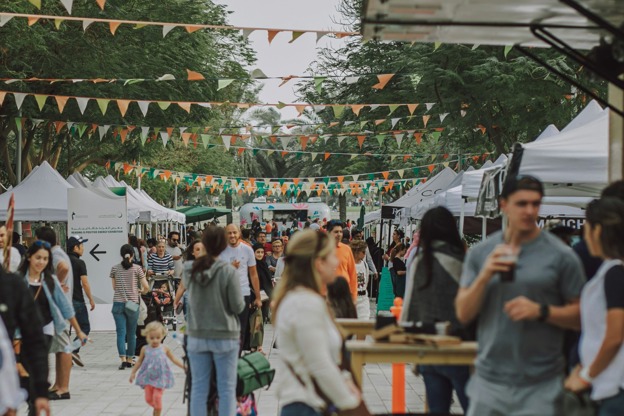
Planned events have quietly become one of the biggest drivers of demand in the tourism industry. What used to be a niche behavior, flying somewhere specifically for a concert or a game, is now mainstream. Music festivals, sports tournaments, conventions, and seasonal celebrations all generate their own dedicated wave of visitors who wouldn't otherwise be traveling to that location at all.
A few numbers tell the story:
|
Trend |
What the Research Shows |
|
Music tourism growth |
Global music tourism is projected to reach $13 billion by 2032 |
|
Concert-driven hotel demand |
Major concerts can boost hotel performance by 25%, with luxury properties seeing the largest gains |
|
Economic scale |
A single major tour stop can generate billions in consumer spending across host cities |
This isn't limited to music. International events like the Olympics and the FIFA World Cup attract tourists on a massive scale, but the same pattern shows up at a smaller level too. Regional sports tournaments, state fairs, and local fairs all draw people willing to travel specifically for that one weekend.
What's changed is how deliberately travelers now plan around these moments. A few factors are driving this:
-
Ticket access shapes travel dates: Once tickets are secured, the trip gets built around that fixed date rather than the other way around.
-
Events create urgency: Unlike a destination that will still be there next year, a specific tour stop or tournament often won't repeat, pushing people to prioritize attending now.
-
Word of mouth and social proof: Seeing others attend a festival or big game makes the experience feel worth chasing in person.
For event management professionals and destinations alike, this trend is reshaping tourism management strategy. But for the traveler on the other side of that equation, it means facing a familiar set of challenges every time a new event goes on the calendar, challenges we'll dig into next.
From Mega Events to Small-Town Fairs: The Spectrum of Event Travel

Not every event worth traveling for is a global spectacle. Event tourism covers a wide range, from mega events that draw visitors from around the world to small, local gatherings that only pull from a few hundred miles away. Understanding where an event falls on that spectrum helps travelers know what to expect, and where an RV has the biggest advantage.
Large-scale events
These are the big draws: the Olympics, the FIFA World Cup, major concert tours like Taylor Swift's Eras Tour. They bring in visitors from multiple countries, put massive pressure on local hotels, and often come with the steepest price surges and the least available lodging.
Mid-size events
Regional sports tournaments, multi-day music festivals, and larger conventions fall into this tier. They may not attract a global audience, but they still create real demand spikes in a specific area, especially in smaller cities that aren't used to surges from the events industry.
Local and seasonal events
State fairs, town festivals, and seasonal celebrations round out the spectrum. These events tend to be smaller in scale but happen more often, and they're often overlooked as a form of event tourism even though they can draw a dedicated crowd year after year.
Here's how the three tiers typically compare:
|
Event Type |
Example |
Typical Lodging Challenge |
|
Large scale |
World Cup, Olympics, major tours |
Hotels sell out months ahead, prices surge |
|
Mid-size |
Regional tournaments, multi-day festivals |
Limited nearby lodging, short-term price spikes |
|
Local/seasonal |
State fairs, town festivals |
Fewer hotels nearby to begin with |
The common thread across all three tiers is the same: traditional lodging struggles to keep up with the temporary surge in visitors, whether that surge is happening at a stadium hosting 80,000 people or a fairground hosting a few thousand. This is exactly why RV travel works at every level of event tourism, not just the headline-grabbing ones.
The Ripple Effect: Why Event Tourism Extends Beyond Fans
When a big event comes to town, the impact doesn't stop at the ticket holders. There's a ripple effect that touches nearly every part of the local economy: hotels, restaurants, transportation, and small local businesses all feel the uptick in visitors, whether that spike lasts a single weekend or an entire tournament season.
Consider what happens around a major event:
-
Hotels and short-term rentals raise prices and fill up as attendees, media, and event staff all compete for the same limited rooms
-
Restaurants see longer lines and higher demand, especially near the venue
-
Local transportation gets busier, with rideshare and parking both harder to find
-
Small businesses nearby often see a temporary boost in foot traffic and sales
Researchers who study this pattern, including experts at EHL Hospitality Business School, point out that these effects can be significant even beyond the event itself. A single concert or tournament can generate measurable spikes in hotel occupancy and local spending that extend well past the days the event is actually happening.
This ripple effect is good news for the destinations hosting these events. It's less good news for the traveler trying to book a place to stay. The same surge in demand that boosts local businesses is what drives up prices and empties out hotel availability for the people actually there to attend. That tension, between a thriving local economy and a squeezed traveler, is exactly what we'll unpack in the next section.
The Short-Term Squeeze: Sold-Out Hotels and Surge Pricing
For travelers attending a planned event, the short-term window around the actual date is where things get difficult. Hotel prices near the venue often climb sharply as the event approaches, and rooms that were available months out can disappear entirely within days of the announcement.
A few patterns show up again and again around major events:
-
Prices surge as the date gets closer: Hotels and short-term rentals use dynamic pricing, meaning the same room can cost far more the week of the event than it did a month earlier.
-
Rooms sell out fast: Popular events can book up nearby lodging months in advance, leaving latecomers with options that are far from the venue or far outside their budget.
-
Check-in times rarely match event schedules: A standard 3 p.m. check-in doesn't help much if a festival gate opens at noon or a game lets out at midnight.
-
Minimum stay requirements can force travelers to pay for extra nights they don't actually need, just to secure a room during a high-demand weekend.
|
Traveler Need |
Typical Hotel Reality |
|
Arrive early for gates or tailgating |
Fixed check-in time, often mid-afternoon |
|
Leave right after the event ends |
Fixed check-out time, often late morning |
|
Flexible length of stay |
Minimum night stays during high-demand dates |
|
Reasonable price close to the venue |
Surge pricing the closer it gets to the event |
This mismatch between what event travelers actually need and what standard lodging offers is the single biggest source of frustration for this kind of trip. It's also the exact gap that RV travel is built to fill, which is what we'll get into next.
Why an RV Solves the Biggest Pain Points of Event Travel
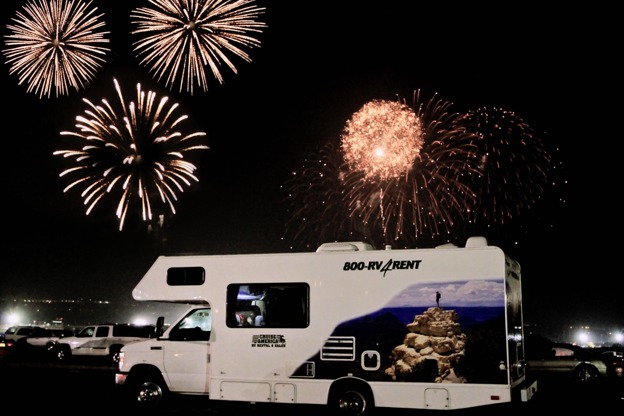
Every problem outlined in the last section comes down to one issue: traditional lodging wasn't built for travelers whose schedule depends on someone else's event. An RV solves that mismatch by putting the traveler in control of their own lodging, parking, and timing.
Built-in lodging means no hotel hunting
There's no race to book a room before it sells out and no surge pricing to worry about. The RV is the hotel, and it travels wherever the trip goes.
Parking flexibility near the action
Many festivals, fairgrounds, and stadiums offer RV or overnight parking options that put travelers within walking distance of the event, something a standard hotel booking can rarely guarantee.
No fixed check-in or check-out times
Arrive at 6 a.m. for tailgating or leave right after the final encore. Nobody is waiting on a front desk clock.
Cooking and eating on your own schedule
Skip the marked-up concession stands and overpriced restaurants near the venue. A kitchen on board means meals happen whenever and however works best for the trip.
Here's a quick side-by-side of how that plays out:
|
Pain Point |
Hotel Booking |
RV Travel |
|
Price near the event date |
Surges as demand rises |
Booked in advance at one flat rate |
|
Distance from venue |
Often miles away once nearby hotels sell out |
Parking often available on-site or nearby |
|
Check-in and check-out |
Fixed hours, rarely matching event times |
Flexible, on the traveler's schedule |
|
Meals |
Reliant on nearby restaurants and concessions |
Cook and eat on your own time |
For event tourists trying to make the most of a single weekend or a multi-day festival, this kind of flexibility isn't just a nice bonus. It's often the difference between a smooth trip and a stressful one.
Events Worth Planning Your Next Trip Around
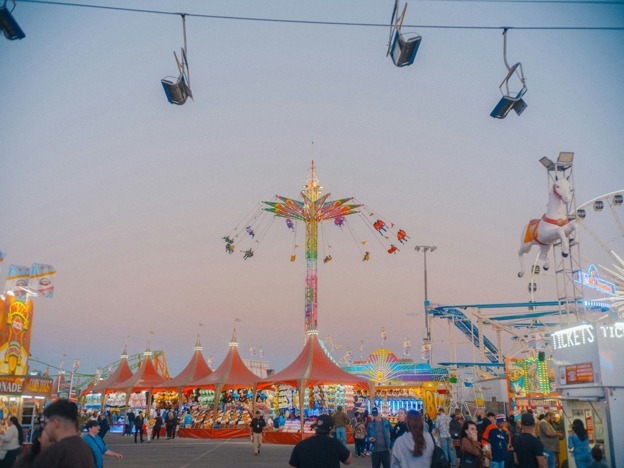
Not sure where to start? Here are a few types of events that are especially well suited to RV travel, each for slightly different reasons.
Music festivals
Multi-day festivals are practically built for RV travel. Many festival grounds offer designated camping or RV parking right on-site, meaning attendees can walk to the stages instead of dealing with rideshare lines or shuttle buses. Since these events often span two or three days, having a place to rest, cook, and recharge between sets makes a huge difference.
Sports championships and tournaments
Sports tourism draws crowds who want to arrive early and stay late. An RV makes tailgating simple since the vehicle doubles as a home base in the parking lot, no need to pack a cooler and grill separately or rush out before traffic hits.
State fairs and seasonal celebrations
These recurring, regional events are often overlooked as travel destinations, but they draw dedicated crowds year after year. Because many state fairs and local festivals take place in areas with limited hotel options nearby, an RV gives travelers a comfortable place to stay without needing to book lodging an hour away.
A few examples worth considering for a future trip:
-
Major music festivals with on-site camping options
-
Regional and national sports tournaments with tailgate culture
-
State fairs and county fairs during peak season
-
Seasonal celebrations like harvest festivals, heritage celebrations, and holiday markets
The Lasting Impact of Event-Based RV Travel
One of the most overlooked benefits of event-based RV travel is what happens outside the event itself. A festival, game, or fair might be the reason for the trip, but it doesn't have to be the only thing on the itinerary.
Since an RV isn't tied to a single hotel reservation, travelers can extend their trip in either direction:
-
Arrive a few days early to explore the surrounding area before the event starts
-
Stay after it ends to check out nearby towns, parks, or attractions without rushing to check out
-
Turn a single event into a full road trip by mapping out stops along the way there and back
This kind of flexibility creates a lasting impact that goes well beyond the event itself. What started as a trip built around one concert or one game often turns into a broader exploration of a region the traveler might never have visited otherwise.
|
Approach |
What It Looks Like |
|
Event-only trip |
Arrive, attend, leave right after |
|
Extended RV trip |
Arrive early, explore nearby areas, attend the event, stay a few extra days |
For many travelers, the memories that stick aren't just the concert or the game. They're the unexpected stop at a roadside diner, the scenic overlook found on the way to the venue, or the extra day spent exploring a town they'd never heard of before. That's the kind of trip an RV makes easy to build around any event on the calendar.
Ready for Your Next Global Event?
Whether it's a global event drawing crowds from around the world or a local fair that only happens once a year, event tourism keeps growing because people want more than just a ticket. They want the full experience, without the stress of sold-out hotels and inflexible schedules getting in the way.
An RV solves the two biggest barriers standing between travelers and their next big event:
-
Cost: No surge pricing, no last-minute room rates, just one booking at a predictable price.
-
Flexibility: No fixed check-in times, no rigid hotel schedules, just a home base that moves on the traveler's terms.
Ready to plan a trip around the next big event on your list? Book a Cruise America RV today!